The Donghai Special Steel Group’s behavioral identification system is the dynamic manifestation of its ideological identity system. Its code of conduct comprises two main components: public‑oriented behavioral norms and executive‑level behavioral norms. As we know, the distinction between behavioral norms and formal rules lies in their nature: rules are rigid and impose hard constraints, whereas norms are flexible and serve as soft constraints. While regulations can govern behavior during working hours, they struggle to address conduct outside those hours; by contrast, behavioral norms not only guide and regulate employees’ actions within work hours but also extend that guidance to their activities beyond working hours.
II. Purpose of the Donghai Special Steel Behavior Recognition System
The purpose of designing this corporate behavior‑identification system for Donghai Special Steel Group is as follows: 1) To translate Donghai Special Steel’s cultural values into concrete codes of conduct, ensuring that these principles not only take deep root in the minds of all employees but also manifest themselves in their daily actions, thereby becoming an integral part of the company’s overall ethos; 2) To harmonize and standardize organizational behavior across the enterprise through these behavioral guidelines, establishing a scientific and well‑structured operational framework, enhancing employee productivity, elevating the company’s public image, and driving sustained growth in both economic and social value.
Welcome to the official website of Hebei Donghai Special Steel Group Co., Ltd.!

Sales Hotline:0315-7560777/7560088
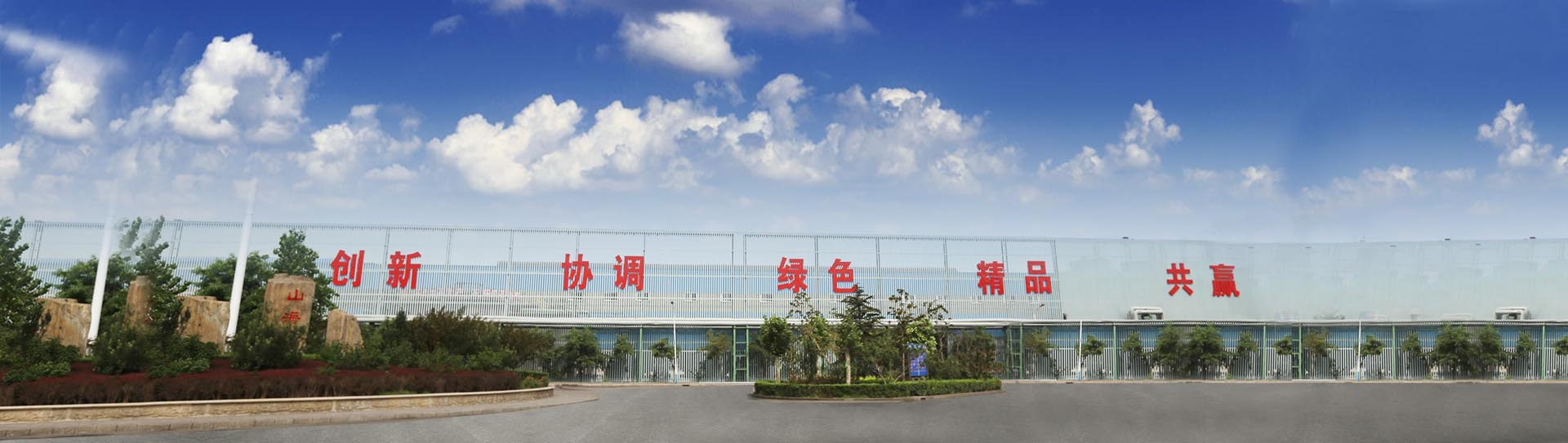

Donghai Special Steel Group Behavior Recognition System
Release date:
2019-01-22
I. Components of the Donghai Special Steel Behavior Recognition System
Public Code of Conduct
Public Code of Conduct:
I. Civilized Greetings and Salutations
1. When visiting guests or company-level executives (wearing red hard hats) enter the company’s production areas or office spaces, employees who encounter them first should proactively stand up and offer a greeting. During on-site tours, relevant unit leaders and on-site supervisors (such as department heads, section chiefs, or team leaders) must accompany and guide the visitors, and upon completion of the tour, see them off to a safe area.
2. When company-level and plant-level leaders (wearing red hard hats) enter the company’s production areas or office spaces, employees should proactively greet them upon first sight.
3. When colleagues meet for the first time at work, they should greet one another. Men should take the initiative to greet women; subordinates should greet their superiors; younger employees should greet their seniors; and those who see someone first may also take the lead in greeting.
4. When someone greets you, you must respond.
5. Before leaving work, be sure to say things like “Goodbye,” “See you tomorrow,” or “I’m heading out now,” and the person who’s leaving should take the initiative to greet others.
6. In public settings, when you encounter someone you know from a distance, do not call out or shout a greeting, nor should you overtake others or cross the aisle to shake hands; simply nod or wave your hand as a gesture of acknowledgment.
II. Civilized Work and Office Practices
1. During working hours, employees must wear appropriate personal protective equipment as required and strictly follow the operating procedures.
2. During working hours, maintain proper hygiene in your assigned work area and the break room; promptly collect and deposit waste in designated areas, and ensure it is sorted and stored accordingly.
3. Office personnel shall keep their desks, filing cabinets, office supplies, and other items neat, organized, and clean; paper scraps and miscellaneous debris must be disposed of promptly in the wastebasket and may not be littered or discarded indiscriminately.
4. Take good care of equipment, tools, and all public facilities both on-site and in the office.
5. Entry into hazardous areas is strictly prohibited for unauthorized personnel. Anyone entering such areas for work purposes must strictly comply with relevant regulations on fire prevention, poisoning prevention, and other safety measures, and complete the required registration procedures.
6. When entering a leader’s or department office to seek instructions, submit reports, or discuss work matters, always knock first and enter only upon receiving permission. If the leader is engaged in a conversation or deliberating with others, wait outside briefly; do not interrupt by stepping directly into the room.
7. Do not shout loudly in the office. When discussing work or making/answering phone calls, keep your voice at an appropriate level and minimize any disturbance to other colleagues in the same room.
8. During working hours, employees shall not discuss matters unrelated to their work, nor shall they wander freely between offices, switch posts, or engage in idle chatter. They must not leave their posts without cause or take breaks in the dormitory, and they are prohibited from performing personal tasks.
9. Promptly report back or provide a response regarding tasks assigned by superiors or matters handled on behalf of others.
10. Take good care of and use company property responsibly; do not intentionally damage it, and avoid extravagance and waste.
11. During work hours, maintain a proactive, positive attitude and adopt a work ethic that is unafraid of dirt, fatigue, or hardship.
12. Employees must approach every task each day with diligence and attention to detail, ensuring that all daily work is completed on the same day and continuously improved.
III. Civilized Commuting
1. Employees shall arrive at work early each day to attend the pre-shift meeting and complete handover procedures and pre-shift preparations.
2. As the workday draws to a close, remain focused and avoid restlessness; upon leaving, organize and properly store all tools and items in your designated work area; and clean your assigned area according to established procedures and standards.
3. Employees must line up and walk on the right side of the roadway (or on the sidewalk) when commuting to and from work. While walking, they are strictly prohibited from speaking loudly, running unnecessarily, or weaving through crowds to rush ahead. When crossing intersections, they must yield to vehicles.
4. Employees must always use crosswalks when crossing the road.
5. Employees must consciously observe public order when walking on roads, refrain from smoking, and avoid littering.
6. When entering or exiting the premises via the pedestrian walkway, please line up in order and swipe your card.
7. Employees taking the shuttle bus must line up voluntarily, disembark before boarding, and keep the vehicle clean.
8. Employees’ vehicles (cars, motorcycles, bicycles) must be neatly parked in the designated parking area and assigned spaces.
9. Employees dining in the cafeteria must line up in an orderly manner to collect their meals and dine, refrain from making loud noises, and keep tables and floors clean.
10. Employees should take good care of all facilities in the bathing area and use water sparingly.
IV. Civilized Appearance
1. Wear work uniforms and personal protective equipment in accordance with company regulations; maintain a neat and appropriate appearance, ensure all buttons are properly fastened, avoid exposing the chest or abdomen, and do not roll up sleeves or trousers.
2. Do not drink alcohol before work, and refrain from consuming pungent, strongly flavored foods such as scallions, garlic, and chives while on duty.
3. Do not consume betel nuts, chewing gum, or snacks during working hours.
4. Keep work uniforms and personal protective equipment clean, and ensure there are no unpleasant odors on your person; do not appear disheveled or with unkempt hair.
V. Civilized Conduct
1. Sit upright and with composure, keeping your back slightly against the chair’s backrest. Avoid leaning forward or backward, reclining on the seat, or lying down.
2. Stand tall and naturally; avoid swaying from side to side, placing your hands on your hips, or shaking your legs uncontrollably.
3. Walk with composure and steadiness; avoid clasping your hands behind your back or swaying your body uncontrollably.
4. Hand gestures should be natural, graceful, and appropriately formal. When introducing someone or guiding a guest, the palm should face upward, fingers together, and the arm extended naturally. During work, any sign language used for directing or communicating should be concise, standardized, and accompanied by eye contact with the other person.
5. Do not spit on the ground, do not litter, and pick up any debris you see and dispose of it in a trash bin.
6. Do not carve or scribble in public places, do not pick or break flowers and branches, and do not trample on the grass.
VI. Civilized Speech
1. When speaking with others, be concise and clear; avoid sarcasm, ambiguity, or shouting.
2. When speaking, consciously use polite and civilized language; refrain from profanity and vulgarities, avoid being overbearing or condescending, and appropriately employ honorifics and humble expressions.
3. When speaking with guests, supervisors, and elders, use the respectful term “you” appropriately. Within the company, address superiors by their official titles rather than by name.
VII. Civilized Calling
1. When speaking on a mobile phone, landline, or walkie-talkie, ensure your voice is clear and gentle, use precise language, and keep your remarks concise.
2. At the start of a call, use polite expressions such as “Hello!”
3. At the end of the call, politely ask the other party, “Is there anything else I can assist you with?” Once you’ve confirmed that you’ve finished speaking, say, “Goodbye!”
4. When on the phone, please keep your volume at a reasonable level and avoid speaking loudly to prevent disrupting others’ work. Keep call durations moderate, and refrain from using the speakerphone in the office.
5. When answering personal calls, keep conversations brief and avoid idle chatter.
VIII. Civilized Reception
1. Treat guests with a warm, friendly smile, kindness, politeness, and enthusiasm, maintaining a humble and respectful demeanor—never be overbearing or unreasonable.
2. When communicating with guests and handling matters, always be trustworthy: keep your word and see things through to completion.
3. Do not bring unauthorized visitors onto company premises without permission.
4. When the visitor departs, bid them farewell in an appropriate manner.
Code of Conduct for the Executive Level
Code of Conduct for the Executive Level:
I. Accepting Instructions
Accurate receipt of instructions is a prerequisite for the executor to carry out their work. Therefore, upon receiving an instruction, the executor must repeat it back to the issuer to ensure its accuracy and clarity.
II. Conducting Work
1. Obey orders and follow command.
Obeying orders and following command are hallmarks of a soldier’s admirable character, and they are equally essential qualities for outstanding employees in the corporate world. Frontline staff must comply with their superiors’ directives and deliver work that meets both quality and quantity standards; they must never pay lip service while acting on their own whims.
2. Love one’s job and dedicate oneself to it; conscientiously perform one’s duties.
A qualified employee should be passionate about their role, genuinely respect and cherish their profession, continuously acquire new knowledge in the course of production, perform their duties with dedication and responsibility, and make due contributions to the enterprise’s production, construction, and development.
3. Adhere to operating procedures and practice safe, civilized production.
To ensure the safety of enterprise operations, personnel, and equipment, employees must be thoroughly familiar with the specific characteristics of their job’s production processes, the structure and performance of relevant equipment, and the production environment. They are required to strictly adhere to and conscientiously follow safety‑related operating procedures, properly wear personal protective equipment, promptly identify and eliminate potential hazards, uphold the “three no‑harm” principle, and achieve safe and civilized production.
4. Master professional skills and optimize production processes.
The level of employees’ professional skills directly determines a company’s production efficiency. Therefore, frontline workers must be thoroughly familiar with the operational requirements of their respective positions. While continuously honing their specialized skills and elevating their performance, they should also strengthen process management, enforce rigorous in-process control, standardize operational practices, strive for excellence, and work to boost productivity, thereby overachieving production targets.
5. Proactive communication and timely feedback
During the course of their work, executors shall promptly report progress to the instruction issuer. This ensures that each task forms a closed-loop, enabling the instruction issuer to stay abreast of developments at all times.
III. Performance Evaluation
Based on the performer’s work completion status, assessments or rewards shall be granted to encourage timely, high-quality, and full‑scale execution of assigned tasks.
Friendly Links:China Iron and Steel Association丨China Iron and Steel Association丨Hebei Provincial Department of Industry and Information Technology
Website Home丨Group Overview丨News and Information丨Marketing Strategy丨Production process丨Technological innovation丨Workplace safety丨Green Development丨Circular economy丨Human Resources丨Corporate culture丨Planning Outlook丨Contact Us
All rights reserved © Hebei Donghai Special Steel Group Co., Ltd.
Website Development:China Enterprise Dynamics Tangshan SEO