Welcome to the official website of Hebei Donghai Special Steel Group Co., Ltd.!

Sales Hotline:0315-7560777/7560088
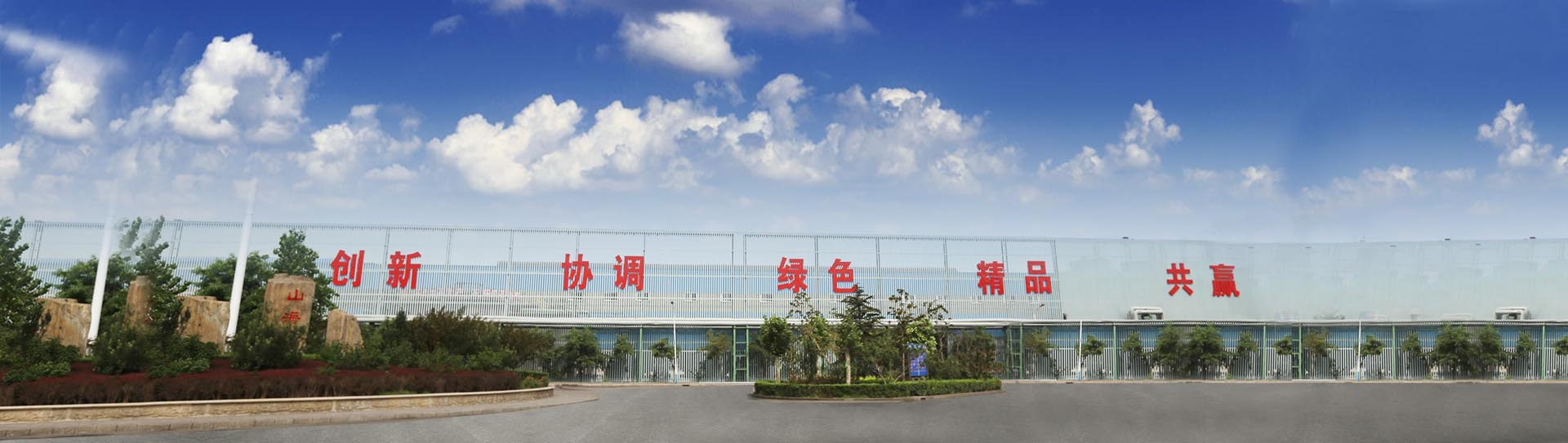

The State Council has launched a series of major technological upgrading projects to support the transformation and upgrading of industries such as steel.
Release date:
2015-11-20
The State Council: Launches a Batch of Major Technological Transformation Projects
On November 18, Premier Li Keqiang of the State Council presided over an executive meeting of the State Council, which adopted measures to improve public services, further streamline administration and delegate power to facilitate public access to services and entrepreneurship; outlined plans to accelerate technological upgrading and transformation of enterprises, thereby advancing industries toward the mid- to high-end segments; and decided to unify the funding guarantee mechanism for compulsory education in both urban and rural areas, promoting equal access to public services in the education sector.
The meeting pointed out that significantly improving public services is a key component of the administrative streamlining and decentralization reform. It not only facilitates production and daily life, fosters mass entrepreneurship and innovation, and boosts market vitality and social creativity, but also constitutes an essential measure for safeguarding the rights and interests of the people. The meeting commended certain departments and localities for addressing public concerns and introducing measures to make services more convenient, while urging them to sustain their efforts and strive for tangible results. First, it called for a comprehensive review and public disclosure of the lists of public service items across all regions, departments, and relevant intermediary agencies, state-owned enterprises, and public institutions, with dynamic updates as needed. For each service item, detailed guidelines should be prepared, clearly outlining procedures, sample documents, and time limits. Second, administrative processes should be streamlined by exploring the consolidation of separate service counters into one-stop windows, shifting from “multiple points of acceptance” to “single-point acceptance.” Third, progress should be accelerated in facilitating information sharing and verification among governments at all levels, between departments, and among state-owned enterprises and public institutions on matters related to public services. Leveraging “Internet Plus,” interdepartmental coordination should be enhanced, transforming the practice of citizens having to make repeated trips into a model of collaborative processing, thereby eliminating the need for redundant certifications at the source and maximizing convenience for the public. Meanwhile, to advance the building of a law-based government, the meeting decided, following an initial review of State Council documents issued between 2001 and 2013, to declare invalid 489 documents that are inconsistent with current laws and regulations, have been superseded or replaced by newer provisions, or have become obsolete.
Wang Jingwen, deputy director of the Macroeconomic Research Center at the Minsheng Bank Research Institute, commented to a reporter from the Economic Information Daily that the phrase “proving your mother is your mother” was once cited by the Premier as a classic joke, while the expression “difficult access, unpleasant treatment, and cumbersome procedures” is often used to describe the performance of certain public service agencies. At this executive meeting, specific measures were outlined to address these issues, notably streamlining administrative processes, enhancing inter‑departmental coordination, and promoting online services and digital feedback mechanisms—steps that will genuinely simplify daily life and work for the public while also strengthening oversight of public institutions.
The meeting concluded that accelerating the technological upgrading and transformation of enterprises—strengthening “Made in China” by enhancing its core capabilities, improving quality and efficiency, and forging new competitive advantages—is a crucial step to both improve supply and expand demand. This is not only an urgent priority but also a long-term strategic imperative. The meeting decided to focus on key areas outlined in “Made in China 2025,” leverage the principal role of enterprises, and, guided by the principle of maintaining support where appropriate while applying prudent restraint, adopt a market‑oriented approach aimed at raising quality and profitability. Accordingly, a batch of major technological upgrading projects will be launched to help market‑driven enterprises in traditional sectors such as light industry, textiles, steel, and building materials upgrade their design, processes, equipment, and energy efficiency, thereby effectively reducing costs and fostering the growth of innovative firms and emerging industries. To this end: first, a guidance catalog for industrial technological upgrading will be issued, accompanied by an annual plan identifying priority projects, to channel social capital and other resources toward these initiatives and stimulate enterprises’ intrinsic motivation to align with market needs and undertake independent upgrades; second, preliminary procedures will be streamlined, parallel approval processes will be promoted to expedite project implementation, and a commitment‑based filing system will be explored and extended to eligible upgrading projects that do not require additional land; third, fiscal and tax measures will be advanced, with innovative approaches to the use of central government funds for technological upgrading to enhance their effectiveness, while local governments are encouraged to increase support for such efforts. Financial services will be improved, with robust mechanisms for financing guarantees and risk compensation put in place to incentivize banks to restructure loans, expand credit for technological upgrading, and support enterprises in broadening access to direct financing. Moreover, alternative financing models—including crowdsourcing, crowdfunding, and peer‑to‑peer innovation—will be encouraged to pool resources and expertise, helping overcome bottlenecks in technological upgrading.
Gao Yuwei, a researcher at the Bank of China’s Institute of International Finance, told a reporter from the Economic Information Daily that enhancing technology and efficiency is an indispensable path during economic downturns. Experience shows that in periods of economic expansion, aggregate market demand grows substantially, making it easier for businesses to thrive; however, once the economy enters a downturn, weak market conditions weed out some firms while compelling surviving companies to upgrade product quality and refine production processes. Compared with greenfield projects, technological upgrading initiatives require lower investment, deliver quicker results, and yield higher returns, making them particularly well-suited to mature and traditional industries. There are no outdated industries—only outdated products. By retrofitting existing capacity with cutting-edge technologies, enterprises can reduce costs and bolster their competitiveness. To advance technological upgrading, it is essential to uphold the enterprise’s central role; the government should provide targeted tax and fee incentives, expand the scale of dedicated funding, leverage fiscal resources to catalyze investment, and strengthen public services such as approval and filing procedures, inspection and testing, and trial‑and‑certification support.
Li Jin, chief researcher at the China Enterprise Research Institute, analyzes that, in the current period and for the foreseeable future, China’s primary task is to shift industrial development from being driven mainly by resource consumption to being innovation‑driven, and to transition from conventional processing and manufacturing toward high‑end manufacturing. As an investment approach that leverages incremental capital inputs to guide adjustments in existing assets, technological upgrading is a crucial measure for accelerating the transformation of the economic development model and a key lever for optimizing and upgrading the industrial structure.
Friendly Links:China Iron and Steel Association丨China Iron and Steel Association丨Hebei Provincial Department of Industry and Information Technology
Website Home丨Group Overview丨News and Information丨Marketing Strategy丨Production process丨Technological innovation丨Workplace safety丨Green Development丨Circular economy丨Human Resources丨Corporate culture丨Planning Outlook丨Contact Us
All rights reserved © Hebei Donghai Special Steel Group Co., Ltd.
Website Development:China Enterprise Dynamics Tangshan SEO